A Data Center Designed to Be a Good Neighbor
Current information about Revolve Labs' new data center in Glencoe — including construction, sound, water, power, jobs, and community impact.
We know residents have questions about what's being built. This page brings the latest information and supporting sources together in one place, and we'll keep it updated as the project moves forward.
What We're Building
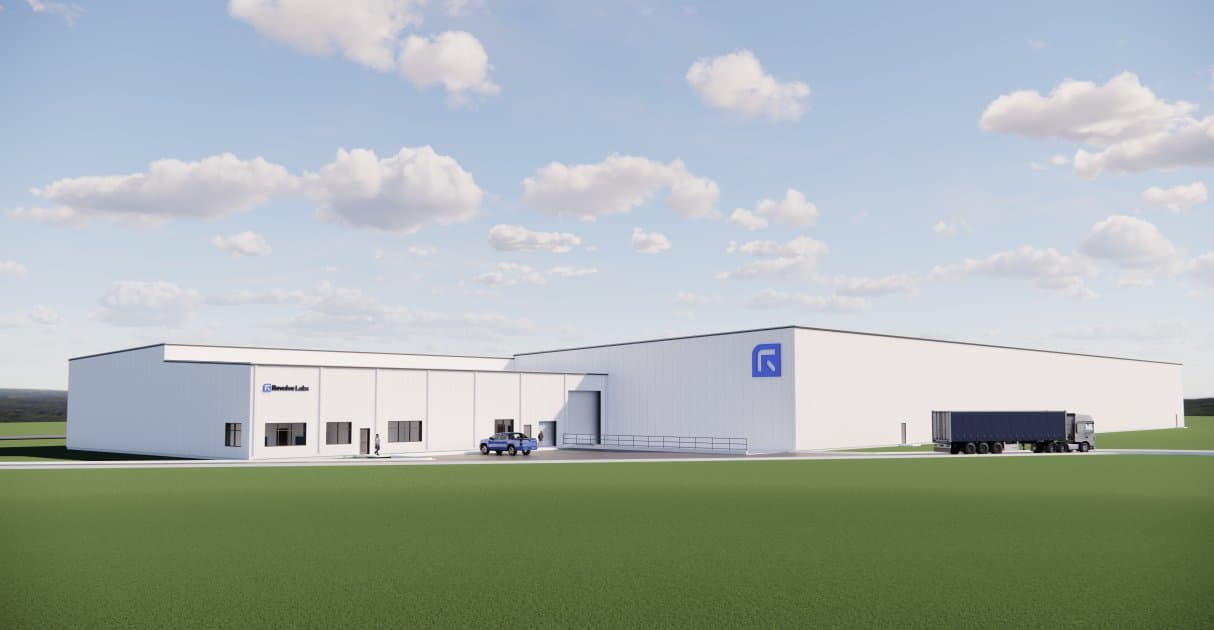
Revolve Labs is building a new AI data center at 670 11th Street West in Glencoe. The facility will provide the computing infrastructure behind AI tools and applications, including "inference" — the processing that happens when an AI system responds to a request.
What is Revolve Labs building in Glencoe?
A purpose-built, small-format data center designed to support AI computing. The site will include a data center component, an ancillary component, and a generator component. The project footprint is about the size of a small warehouse facility, on 6.25 acres. Target completion is April 2027.
What actually happens inside a data center?
The building houses computer servers that perform the computing behind AI tools and applications. For example, when someone asks an AI assistant a question and receives an answer, the computing required to produce that answer is called "inference." Similar computing is increasingly used across healthcare, education, financial services, and other industries.
What happens to Revolve Labs' existing facility?
We will wind down operations at our existing Glencoe facility as the new data center comes online. The electrical capacity currently serving the existing facility will transition to the new site, consolidating our Glencoe operations into the new purpose-built data center. The existing site will house our battery storage system.
When is the new data center expected to be completed?
Our current target is April 2027. Construction schedules can change as work progresses, but that remains the current project timeline.
What should residents expect during construction?
Construction will bring the same temporary circumstances that surround any new building project: temporarily increased traffic, contractors, and activity to the area, particularly during the busiest stages of building. Once construction is complete, activity will decrease substantially because the operating facility requires a relatively small, steady workforce.
What standards does the new facility have to meet?
The project must comply with applicable city, state, building, environmental, electrical, fire, and other regulatory requirements. Those requirements are incorporated into the design, permitting, construction, and operation of the facility.
Who is Revolve Labs?
Revolve Labs is a U.S. company that develops and operates data centers for high-performance computing and AI. We already operate a facility in Glencoe today, and this project reflects our continued investment in the community as we transition from our existing crypto-mining operations to next-generation AI infrastructure. We work closely with local utilities, regulators, and residents throughout the planning, construction, and operation of each site we build.
Designed With Nearby Residents in Mind
We heard the concerns about sound from our existing crypto-mining site. This facility is designed differently, with sound mitigation built in before operations begin.
Who checked our work
We hired Absolute Noise Control (ANC), a third-party acoustical consultant based in Texas, to measure existing sound conditions on-site and model the sound expected from the new equipment. ANC has been in business since 2011 and has completed 750+ sound mitigation projects, including work specifically for data centers — this isn't their first time evaluating a site like ours.
Before and after mitigation
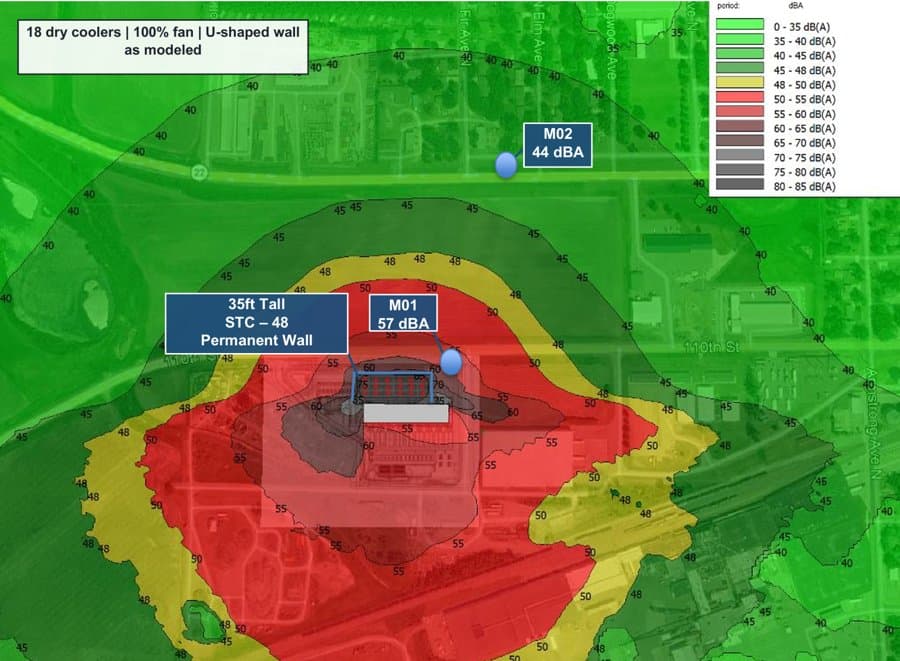
ANC modeled all 18 dry coolers operating simultaneously at 100% fan speed, representing a conservative operating condition. M01 is our property line; M02 is the nearest residential area, about 1,200 ft north of the site.
| Without mitigation | With mitigation | |
|---|---|---|
| M01 — property line | 70 dBA | 57 dBA |
| M02 — nearest residential area | 53 dBA | 44 dBA |
44 dBA at the nearest residential area is below Minnesota's 50 dBA nighttime limit for residential areas, and below ANC's 47 dBA design target.
Establishing a Baseline Before Operations
Before construction, ANC completed 72 hours of ambient sound monitoring around the project site. Average existing sound levels during that measurement period were approximately 62–64 dBA, reflecting existing sources such as road traffic, rail activity, and other surrounding operations.
The survey also found that 12 of the 27 nighttime hours measured were already above Minnesota's 50 dBA nighttime L50 threshold before the new data center was operating.
Establishing those existing conditions gives ANC a baseline for the post-commissioning verification study, helping distinguish sound from the new facility from sound already present in the surrounding area.
Source: ANC Noise Management Plan (MSP-G1), ambient survey conducted August 7–9, 2026, report issued September 1, 2026.
What happens after construction?
Revolve has contracted ANC to return after the facility is commissioned and conduct field sound testing while the equipment is operating. We plan to publish those verification results here so residents can compare modeled and actual operating performance.
How is sound being managed at the new facility?
Sound mitigation has been incorporated into the design of the new facility from the beginning. We engaged Absolute Noise Control, an independent sound specialist that has completed more than 750 projects and specializes in sound mitigation for data centers and industrial sites. For the Glencoe site, its work includes measuring existing sound levels, modeling the new facility, designing appropriate mitigation, and verifying actual sound levels after the facility is operating.
What does the independent sound study show?
The independent study shows the modeled dry-cooler contribution is expected to be 44 dBA at the nearest residential area after the planned sound mitigation is installed — below Minnesota's 50 dBA nighttime limit for residential areas, and below ANC's 47 dBA design target. The study also predicts approximately 57 dBA at the property line itself, which is a reference point rather than a residential measurement. For everyday context, 44 dBA is roughly comparable to a running refrigerator, and quieter than the neighborhood's own existing background noise, which already averages 62–64 dBA from highway and rail traffic.
How will Revolve Labs verify the results after the facility opens?
Revolve has contracted ANC to return after the facility is commissioned and measure actual sound levels while the equipment is operating, so we can confirm the completed site performs as expected. If additional mitigation is required to meet applicable sound requirements, we will address it.
Why look at both the property line and the nearby residential area?
The two locations help us understand sound at different distances from the equipment. M01 shows the modeled sound at our property line. M02 is approximately 1,200 feet north of the site and represents the nearby residential area, so it helps show what the dry coolers are expected to contribute where residents live.
Significant Capacity Remains Available
Glencoe's water treatment system is designed for approximately 1.8 million gallons per day.
At current average City use + our full contractual maximum
Water use changes with the weather
"It would be less of a bonding issue. It would be less impact on the taxpayer, on the user, the resident."
Your water and sewer bill will not change because of us.
View the City's Water Department page →Will the data center cause my water or sewer rates to increase?
No. The City has confirmed that residential water and sewer rates will not increase as a result of this project.
Does Glencoe have enough water capacity for the data center?
Yes. At the City's current average water use plus the data center's full 200,000 gallon-per-day contractual maximum, total use would equal approximately 34% of existing treatment capacity, leaving approximately 66% available. Glencoe's water treatment infrastructure can treat approximately 1.8 million gallons per day.
Does the City and its residents benefit from the data center's water usage?
Yes. The data center pays for the utility services it uses, contributing additional revenue for the City's water system. That additional revenue can help support future infrastructure needs and reduce the amount that would otherwise need to be financed through bonding or passed on to taxpayers and utility customers.
Where does the water go after it's used for cooling?
Most of it evaporates as part of the cooling process. A small remainder returns to the wastewater system — see the Wastewater section below for those numbers.
A Small Addition to Existing Wastewater Flow
Most of the water used for cooling evaporates during that process. Only a small remainder actually returns to the city's wastewater system.
"We have some of the best drinking water and some of the best effluent that goes into Buffalo Creek in the state of Minnesota. We will be in a better situation, even with the added wear and tear."View the City's Wastewater Department page →
How will wastewater from the data center be handled?
Wastewater from the facility will go through Glencoe's existing wastewater treatment system and must meet the same permitted standards that apply to other residential, commercial, and industrial users. It will primarily consist of a limited amount of water discharged as part of the cooling process — most water used for cooling evaporates and does not enter the wastewater system at all.
Does Glencoe have enough wastewater treatment capacity?
Yes. Combined, the City's current flow plus the data center's approximately 13,000 gallons per day comes to roughly 17% of the maximum wastewater system capacity of 6 million gallons per day — leaving approximately 83% available.
What happens to wastewater before it is discharged?
Just like wastewater from any household or business in the city, it's treated through Glencoe's municipal wastewater process before discharge. That process includes biological treatment, phosphorus removal, filtration, and ultraviolet disinfection, and must meet applicable state and federal permit requirements before being released into Buffalo Creek.
Is the data center's wastewater treated differently from anyone else's?
No — it goes through the exact same municipal treatment process as wastewater from any home or business in Glencoe, and must meet the same permitted standards.
Using Power When the Grid Has More Room
Our facility is designed to draw less electricity during the hours when the grid is under the most pressure. On-site batteries cover part of our load during those periods, then recharge later — primarily when demand is lower.
- Lower-demand hours. Batteries recharge primarily overnight and during other lower-demand periods.
- More wind is often available during those hours. Lower-demand charging periods often overlap with stronger regional wind generation.
- Stored electricity helps during busier periods. Batteries reduce how much electricity the facility needs to draw from the grid when demand is higher.
Historical MISO data shows that regional wind generation tends to be stronger overnight and into the morning, which often overlaps with the lower-demand periods when batteries can recharge. Actual charging will be managed based on grid conditions and facility needs rather than occurring at one fixed time every day.
"The additional revenues that have been received by having this facility in town have in fact slightly decreased our native load customers' rates." (= regular residential customers)
Will the data center cause my electricity rate to increase?
No. In fact, Glencoe Light & Power has stated that additional revenue from Revolve Labs' existing electrical load has helped keep residential rates lower.
Will the data center affect the reliability of electricity to residents?
The facility is served through dedicated electrical infrastructure and has its own on-site backup systems. It does not receive priority over residential customers during an outage.
Will the data center get priority over my home during an outage?
No. The data center does not receive priority over residential customers. It is served through dedicated electrical infrastructure and has its own backup systems.
Why Batteries Are Part of the Project
Battery storage gives the facility flexibility over when it draws power from the grid — reducing demand at busy times and recharging when the system has room.
- Located at our current site (the existing crypto-mining location), not the new building.
Which battery system will you use?
Final equipment selection is still being completed. We are evaluating established utility-scale battery systems that are already deployed across the United States.
Once the final system is selected, we'll publish the manufacturer, relevant safety information, sound specifications, and examples of comparable installations.
Are systems like these already in use elsewhere?
Yes — grid-scale battery storage is widely used by utilities and large energy users nationwide.
Are grid-scale batteries like these already used elsewhere?
Yes — this type of battery storage is widely deployed by utilities and large energy users nationwide as a standard part of modern grid operations.
Do the batteries make noise?
The battery cells themselves are not the primary sound source, but cooling systems, inverters, transformers, and other supporting electrical equipment can generate sound.
The systems under consideration use modern thermal-management technology, and the final installation is expected to use liquid-cooled battery technology. Because final equipment and site configuration are still being completed, the full site-level sound contribution has not yet been modeled.
Once the final system is selected, we'll publish the manufacturer's sound specifications and any site-specific sound analysis completed for the installation.
Emergency Backup, Not Everyday Generation
The facility's generators are designed to provide backup power if normal utility service is unavailable. They will also operate periodically for required testing and maintenance, but are not intended to serve as the facility's normal power source.
Final information on permitted operating limits, routine testing, and sound controls will be added here as those items are completed.
- Emergency backup only — used when utility power is unavailable.
- Enclosed generator building south of the main campus.
- Periodic testing required
- Subject to environmental permitting requirements.
How will the backup generators be used?
The generators are backup equipment and are not intended to be the data center's normal source of power. They will be used when needed during an outage and for required testing and maintenance, and their operation will be subject to applicable Minnesota air-quality and permitting requirements.
Zero Cost to Taxpayers
We fund 100% of that infrastructure. Once it's built and connected, it becomes City or utility property. For the electrical infrastructure specifically, any reimbursement to Revolve happens through credits generated by the new utility revenue the project itself creates — not through charges to existing customers.
Will taxpayers have to pay for the infrastructure needed for the data center?
No. The cost to taxpayers for the water, sewer, and electrical infrastructure extensions needed to serve the project is $0. Revolve Labs is paying for the infrastructure extensions required to serve the site. Once completed, the applicable infrastructure becomes City or utility property. For the electrical infrastructure, any reimbursement to Revolve occurs through credits generated by the new utility revenue from the project itself, rather than charges to existing customers.
Jobs, Local Spending, and New Tax Revenue
The technical roles will be phased in over the facility's first one to two years. An experienced third-party data center operator will initially support day-to-day operations while local employees are recruited and trained to take on more of the site's long-term operations.
Will the data center create jobs in Glencoe?
Yes. The facility is expected to create 20–30 full-time technical jobs, plus approximately 9–10 full-time security positions, with an emphasis on building a local workforce. Technical roles are expected to include people with trade backgrounds in electrical systems, HVAC, industrial maintenance, data center operations, and related fields.
Will local residents be able to apply for those jobs?
Yes. Building a local operating workforce is part of the plan. An experienced data center operator is expected to help operate the facility during the first one to two years while local employees are trained to take on more of the site's long-term operations. Information on available positions and how to apply will be shared as hiring gets closer.
Will construction benefit local businesses?
Yes. Construction will bring a significant workforce to Glencoe — approximately 400 contractors at peak — creating additional spending at local restaurants, hotels, gas stations, and other businesses.
Will the data center generate local tax revenue?
Yes. The completed facility will generate additional local property tax revenue. The exact amount will be determined through the county's assessment process after construction, and we will share the confirmed figure once it is available.
More Than $1 Million Planned for the Community
We plan to invest more than $1 million in Glencoe over the next 10 years. We intend to work through an existing local organization, with resident input helping shape where that support can have the greatest impact — potentially including parks, trails, green spaces, and other community priorities.
- Driven by resident input.
- Delivered through an existing local organization, not a new one we create.
- Already built into our project budget.
Where would you like to see investment?
Is Revolve Labs investing in Glencoe beyond jobs and taxes?
Yes. We are developing a long-term community investment program designed to support priorities identified locally. We intend to work through an existing local organization so the community has a meaningful role in determining where that support can have the greatest impact.
Will the data center expand in the future?
The project being presented today is limited to the current planned site and footprint. Any future expansion would be a separate decision and would need to go through the applicable utility, planning, and permitting processes.
How will the community have input into where this investment goes?
We're working through an existing local organization so the community has a meaningful role in deciding where this support can have the greatest impact — and you can share ideas directly using the form above.
Built With Minnesota Partners
Dozens of companies are involved in building this project, including many Minnesota-based partners:
- Rice Companies (Sauk Rapids) — construction
- Landwehr (St. Cloud) — groundwork
- Braun Intertec (Bloomington) — engineering
- Nuvera Communications (New Ulm) — network
- Arvig (Perham) — internet
- Resco (Moorhead) — electrical
The full partner, supplier, and manufacturer list is included in the appendix of the community presentation.
Are Minnesota companies involved in building the project?
Yes. Dozens of partners, manufacturers, and suppliers are involved in the project, including Minnesota-based companies such as Rice Companies, Landwehr, Braun Intertec, Nuvera, Arvig, Dooley's, Resco, and Xerxes, alongside specialist data center contractors and suppliers.
What This Facility Can Help Support
AI data centers provide the computing infrastructure behind a growing range of practical tools. One type of work performed inside the facility is called "inference" — the computing that happens when an AI system processes information and produces a response.
The same type of high-performance computing infrastructure supports applications across healthcare, agriculture, education, financial services, and other industries. The examples below illustrate the types of applications this kind of computing supports generally — they are not applications that run on this specific Glencoe facility.

In an NHS pilot, an AI tool reviewed mammograms from nearly 11,000 women and flagged 11 early-stage cancers that radiologists had missed on first read.

Mayo Clinic's EAGLE trial, run across 45 clinics in Minnesota and Wisconsin (including rural sites), used AI-read EKGs to catch weak-heart-pump cases doctors would otherwise have missed.
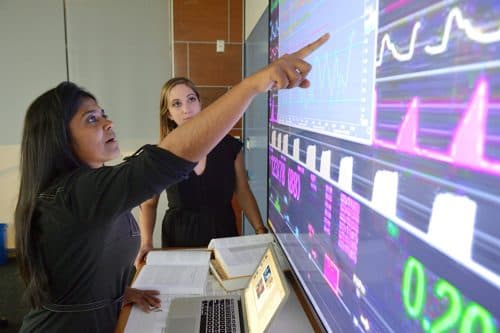
A Johns Hopkins-built, FDA-cleared AI tool flags sepsis risk up to two days earlier than standard methods, and has reduced sepsis deaths by roughly 18% in hospitals using it.

John Deere's AI-powered See & Spray system uses onboard cameras to tell weeds apart from crops in real time, spraying only where weeds actually are. In 2024, it saved farmers an estimated 8 million gallons of herbicide across more than a million acres — an average reduction of 59%.
These are a few sourced examples out of many — healthcare and agriculture are just two of several fields where this kind of technology is already in everyday use.
Is AI used anywhere else?
Yes — similar computing is increasingly used across healthcare, education, financial services, and other industries. The examples above are a few sourced highlights, not the whole picture.
See the Information Behind the Numbers
We want residents to be able to review the independent studies and supporting source information behind the key claims on this page.
Topics We Know Are On Your Mind
- Electric bill going up? No project-related increase. Glencoe Light & Power has said Revolve's existing load has helped keep residential rates lower.
- Water/sewer bill going up? No — confirmed by the city.
- Priority during an outage? No. The data center does not receive priority over residential customers and has its own backup systems.
- Expanding later? No current plans beyond the current project footprint. Any future expansion would be subject to the applicable utility, planning, and permitting processes.
What You Can Expect From Us
We want to be a responsible, long-term neighbor in Glencoe. That means sharing major project updates that affect the community, verifying sound levels after the facility opens, meeting applicable operating and environmental requirements, and responding to residents' questions.
Have a question we haven't answered here? We want to hear it.
Next community meeting: December 7, 2026